
 Japanese
Message from the President
About NITech
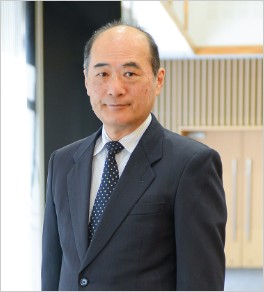
OBATA Makoto
President,
Nagoya Institute of Technology
Our Motto is "Engineering with Heart and Mind for Humanity"
Nagoya Institute of Technology (NITech) started as the Nagoya Higher Technical School, founded in 1905 as the first national institution in central Japan. Since then, NITech has produced about 80,000 graduates over about 120 years. As one of the leading technical universities in Japan, it has continuously contributed to the development of industry and society in the region and the country.
NITech established the Advanced Engineering Education Program, the Creative Engineering Program, and the Fundamental Engineering Program. The Advanced Engineering Education Program covers almost all fields of engineering, consisting of Department of Life Science and Applied Chemistry, Department of Physical Science and Engineering, Department of Electrical and Mechanical Engineering, Department of Computer Science, Department of Architecture, Civil Engineering, and Industrial Management Engineering. The Creative Engineering Program is a six-year integrated undergraduate and master's degree program. The Fundamental Engineering Program is the evening program. The Graduate School of NITech has actively promoted interdisciplinary research and education, and we have reorganized and integrated both the master's and doctoral courses into the Engineering Major. We also established programs, including multidisciplinary fields such as "Future Communications", "Carbon Neutrality Science and Engineering" and "Biomedical Science and Engineering" in the Master's Course, in addition to the programs in existing specialized fields. In the doctoral program, in addition to the existing engineering major, we are promoting a cooperative major with Nagoya City University and two joint degree programs that emphasize international collaboration.
Engineering is a field of study related to 'manufacturing'(Monozukuri ), but its outcomes create connections between people and support society. We pursue an approach to engineering that emphasizes human connections, under the belief that 'engineering should be done with the heart,' we have adopted the slogan 'Engineering with Heart.' We practice 'human development'(Hitozukuri ) through education and 'future creation'(Miraizukuri ) through research and technological innovation, contributing to the realization of a better society."